Egypt, 1919
The Nayara Crossing
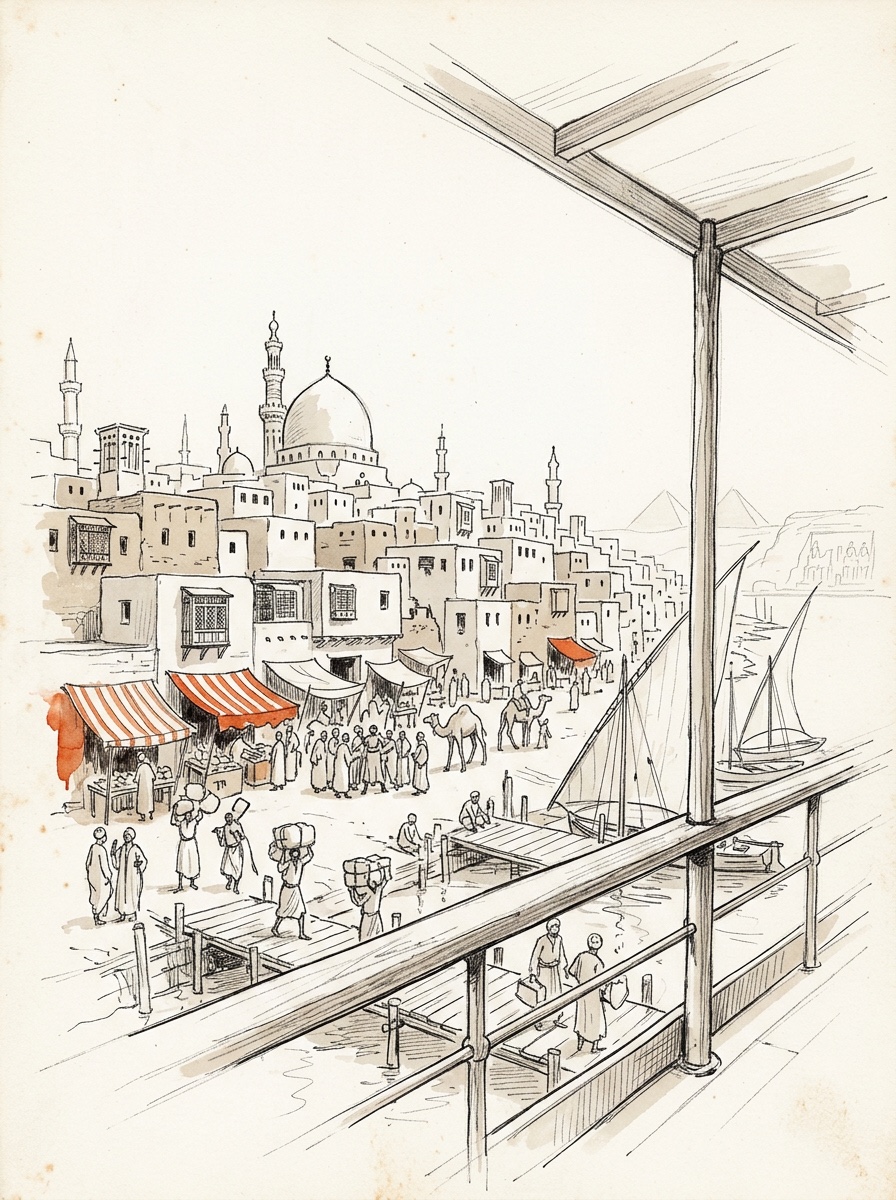
We meet our hero on the deck of the Hiron, drifting down the Nile after months of fruitless search in the African interior. The old steamer is putting in at Nayara for fresh supplies and a change of passengers, and for a few hours the world comes aboard.
The flimsy docks swarm with dockworkers, porters and travelers. Beyond them the markets spill toward the water: street stalls, snake charmers, and pickpockets working the crowd gathered around a quarrel between a caravan master and a shopkeeper whose dates have just become camel fodder. Past the markets the city climbs the riverbank, its skyline crowded with minarets and the dome of the old university. And further still, shimmering at the edge of sight, the tips of ancient pyramids and the stone faces of temple gods carved into the mountains.
Nayara smells of jasmine, tobacco, sweat and cardamom. A thread of belly dance music winds through the clatter of carts, the bleating of goats and the heat of a dozen arguments, until the steam horn lets out its long, low bellow and drowns it all, startling a flock of ibis that lift from the shallows and flash white as they rise into the clear blue sky, foreboding the heat of the day ahead of you like a debt coming due.
You lean on the rail and watch the city. Every mile from here points home, to failure and to disgrace. The year is 1919, the place is Egypt, and this was supposed to be your year of triumph.